Congestion Pricing Will Make You Happy

An op/ed by Eduardo Porter in today’s New York Times makes a passing suggestion that by reducing the number of people who do solo car commutes, congestion pricing would make New Yorkers happier.
I can say this for sure: If it also reduces the number of honking, revving, careening and exhaust-spewing sociopaths clogging New York City streets in their gigundo sedans and sports utes it’ll definitely make me happier. I don’t know if it’s just me or if for some reason there has been a sudden increase in idiotic driving and needless horn-blasting but lately I find myself wanting to take a sledgehammer to lots of New York City drivers’ windshields. I suppose this sinks me pretty far down in the happiness rankings. Here’s an excerpt:
The framers of the Declaration of Independence evidently believed
that happiness could be achieved, putting its pursuit up there
alongside the unalienable rights to life and liberty. Though
governments since then have seen life and liberty as deserving of
vigorous protection, for all the public policies aimed at increasing
economic growth, people have been left to sort out their happiness.This
is an unfortunate omission. Despite all the wealth we have accumulated
— increased life expectancy, central heating, plasma TVs and
venti-white-chocolate-mocha Frappuccinos — true happiness has lagged
our prosperity…Despite happiness’ apparently Sisyphean nature, there may be ways to
increase satisfaction over the long term. While the extra happiness
derived from a raise or a winning lottery ticket might be fleeting,
studies have found that the happiness people derive from free time or
social interaction is less susceptible to comparisons with other people
around them. Non-monetary rewards — like more vacations, or more time
with friends or family — are likely to produce more lasting changes in
satisfaction.This swings the door wide open for government
intervention. On a small scale, congestion taxes to encourage people to
carpool would reduce the distress of the solo morning commute, which
apparently drives people nuts.
Perhaps no coincidence, Denmark — the land of Jan Gehl, communal, car-free public spaces and high-heeled cyclists — consistently lands the #1 spot in studies of the world’s happiest nation. Here is a recent study in the British Medical Journal.
Map of World Happiness: University of Leicester School of Psychology.

Read More:
Streetsblog has migrated to a new comment system. New commenters can register directly in the comments section of any article. Returning commenters: your previous comments and display name have been preserved, but you'll need to reclaim your account by clicking "Forgot your password?" on the sign-in form, entering your email, and following the verification link to set a new password — this is required because passwords could not be carried over during the migration. For questions, contact tips@streetsblog.org.
More from Streetsblog USA
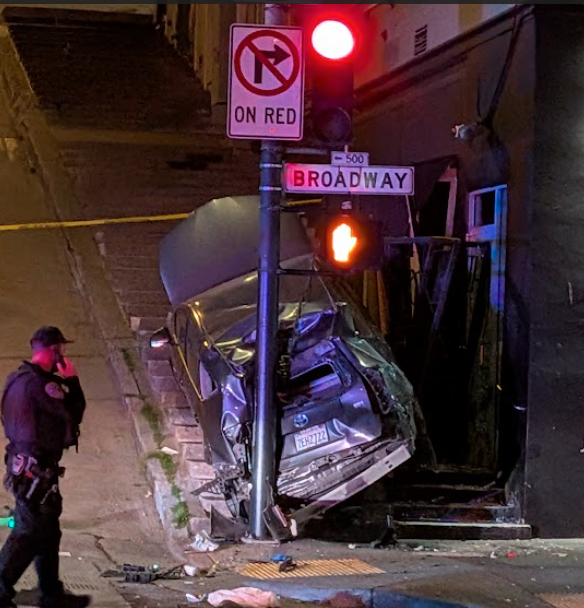
Motorist Careens onto North Beach Sidewalk, Killing Pedestrian
Driver kills pedestrian at another location where a safety project festered
The post Motorist Careens onto North Beach Sidewalk, Killing Pedestrian appeared first on Streetsblog San Francisco.