Queens Civic Congress Has Its Own Plan

No one who comes before the NYC Traffic Congestion Mitigation Commission is going to admit to liking congestion. If they’re against the mayor’s congestion-pricing plan, they are usually going to come up with some kind of alternative.
Take the Queens Civic Congress, which advanced its position at an Oct. 30 hearing. Jim Trent, the chair of the group’s transportation committee, reiterated opposition to “any plan or scheme to impose a tax, fee or toll on vehicles to enter Manhattan.” He then argued that “sound, cost-efficient and effective measures that reduce congestion without any reliance on the costly congestion tax scheme exist.”
So what does the group want and how do they propose to fund it? They’re calling for a number of mass-transit improvements (PDF), including changes in F, G, and V routes, extension of LIRR local service in Queens, and a complete rethinking of the borough’s bus routes.
And how do they want to pay for it? Through the Queens Civic Congress Real Property Tax Reform Initiative, which, the group claims, would “capture billions of dollars in lost real estate tax revenue based on illegal uses and improper property classifications.” They also propose “a surcharge on (New York State Adjusted Gross) income over $200,000” and a non-resident income tax.
Here’s a link to a PDF of their revenue proposals.
While it’s refreshing to finally see Queens civic groups tackling transportation policy, their proposal has two major flaws. It offers no incentive to get people out of their cars and does nothing to get private automobiles out of the way of city buses.
If only we could provide the Queens Civic Congress leadership with airplane tickets to Paris, London and Bogota. In any of those three cities, Trent and friends will find bus systems that have emerged as competitive, high-quality transportation options either by pricing some cars off the street or by simply taking away street space from private automobiles and reassigning it to public buses.
Using property tax reform to pay for more buses to sit in steadily worsening traffic, isn’t a successful model in any city that we know of.
Photo: Sarah Goodyear

Read More:
Streetsblog has migrated to a new comment system. New commenters can register directly in the comments section of any article. Returning commenters: your previous comments and display name have been preserved, but you'll need to reclaim your account by clicking "Forgot your password?" on the sign-in form, entering your email, and following the verification link to set a new password — this is required because passwords could not be carried over during the migration. For questions, contact tips@streetsblog.org.
More from Streetsblog USA
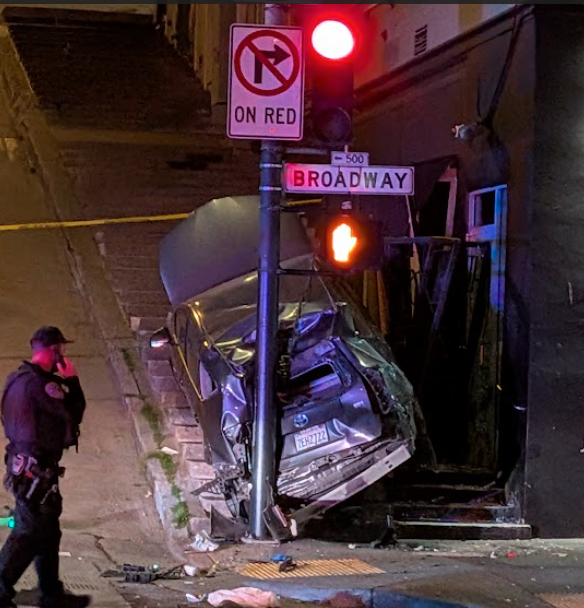
Motorist Careens onto North Beach Sidewalk, Killing Pedestrian
Driver kills pedestrian at another location where a safety project festered
The post Motorist Careens onto North Beach Sidewalk, Killing Pedestrian appeared first on Streetsblog San Francisco.