Seeing Myrtle Avenue With Fresh Eyes
The folks over at the Myrtle Avenue Brooklyn Partnership have unveiled the results
of a collaboration with the Project for Public Spaces (PPS) undertaken
over the last couple of years. Two public workshops were held to get
community input on the plans, which address four different areas of
Myrtle Avenue, one of the main commercial streets for Fort Greene and Clinton Hill.
The days when Myrtle was known as “Murder
Avenue” are long past. Thriving shops and restaurants line much of the
street, in part thanks to the efforts of the Myrtle Avenue
Revitalization Project and the Myrtle Avenue Brooklyn Business
Improvement District (constituent members of the Myrtle Avenue Brooklyn
Partnership). But many areas remain where the street’s potential is
going unrealized, and that’s what the collaboration with PPS was meant
to address. “We were looking at streetscape conditions,” says Vaidila
Kungys, the partnership’s program manager for planning and economic
development. “There’s a lot of clutter, crowded sidewalks and
problematic intersections.”


There are also huge swaths of underused or poorly used space, including the area between Carlton and Ashland, which borders Fort Greene Park and the Walt Whitman Houses, and the portion from Hall Street to Emerson Place, which fronts on a superblock. Because of a four-block service road in this section, seven lanes devoted to vehicles separate one side of the street from the other. Pratt’s freshly revealed plans for the site at 524 Myrtle could be a catalyst for improvements here.

The report shows how a service road next to a superblock marginalizes pedestrians
Michael Blaise Backer, executive director of the Myrtle Avenue Brooklyn Partnership, is optimistic about the group’s chances for implementing at least some of the recommendations that come out of the study before too much time passes. Some solutions, like the ones proposed for the intersection of Clinton Avenue and Myrtle (sketches above), are relatively simple, and Myrtle Avenue Brooklyn Partnership’s solid track record with community leaders, business owners and politicians will certainly make a difference. “We’ve got all the stakeholders involved,” says Backer. He notes as well that the current leadership at DOT is likely to be receptive to this sort of “livable streets” improvement.
We’ll keep an eye on it.

Read More:
Streetsblog has migrated to a new comment system. New commenters can register directly in the comments section of any article. Returning commenters: your previous comments and display name have been preserved, but you'll need to reclaim your account by clicking "Forgot your password?" on the sign-in form, entering your email, and following the verification link to set a new password — this is required because passwords could not be carried over during the migration. For questions, contact tips@streetsblog.org.
More from Streetsblog USA
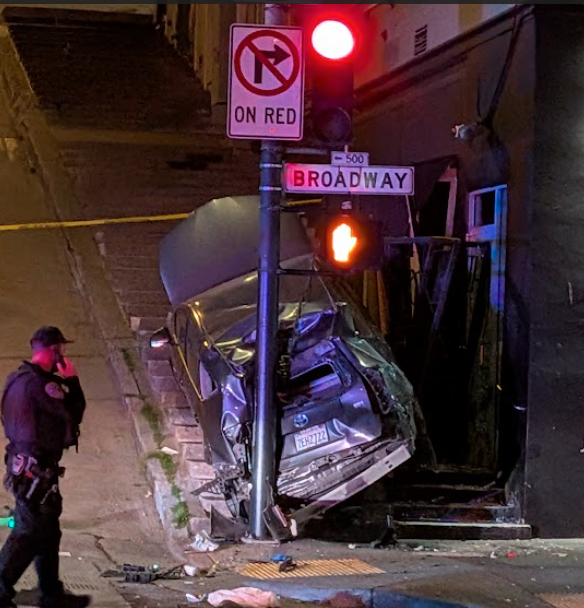
Motorist Careens onto North Beach Sidewalk, Killing Pedestrian
Driver kills pedestrian at another location where a safety project festered
The post Motorist Careens onto North Beach Sidewalk, Killing Pedestrian appeared first on Streetsblog San Francisco.