Congestion Relief: It’s About Your Health

Yesterday’s New York Times editorial on transportation policy makes a strong case for linking concerns about traffic congestion to concerns about health. It’s worth looking at the full text of All Choked Up, the report from Environmental Defense that the paper references when arguing that in order to achieve his goal of a sustainable city,
The mayor will have to deal aggressively with a vexing problem, traffic congestion. If that piece of the plan falls short, the rest of Mr. Bloomberg’s vision won’t much matter. In just a couple of decades, New York is expected to add nearly a million more people. To have any hope of keeping people moving, the city will need to take real and substantial action to unclog its roads – including some form of congestion fee and other disincentives to driving on the busiest streets.
Besides helping business and boosting the general quality of life, congestion relief would also produce cleaner air, to the enormous benefit of public health, a fact that has so far mostly been missed in the debate over congestion pricing. But a newly released report from Environmental Defense, a nonpartisan group, is likely to give these issues more prominence.
The report shows that vehicle emissions – especially dangerous diesel soot – can pollute the air as far as 1,500 feet from the source. In New York City, that means it’s hard to escape them, which is troubling in a city with high asthma rates. And not just asthma but lung problems, as well as heart disease, have been linked to vehicle emissions, which are also thought to contribute to strokes and some kinds of cancers.
That is all worth considering as Mr. Bloomberg’s team tries to balance good policy with what is politically achievable.
Is it too much to hope that traffic can someday soon be seen as a public health issue? Don’t forget that not long ago, banning smoking in bars would have seemed more political suicide than “politically achievable.”

Read More:
Streetsblog has migrated to a new comment system. New commenters can register directly in the comments section of any article. Returning commenters: your previous comments and display name have been preserved, but you'll need to reclaim your account by clicking "Forgot your password?" on the sign-in form, entering your email, and following the verification link to set a new password — this is required because passwords could not be carried over during the migration. For questions, contact tips@streetsblog.org.
More from Streetsblog USA
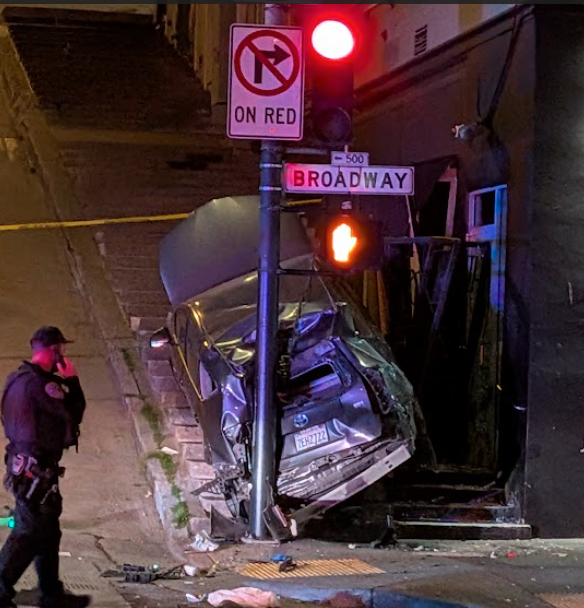
Motorist Careens onto North Beach Sidewalk, Killing Pedestrian
Driver kills pedestrian at another location where a safety project festered
The post Motorist Careens onto North Beach Sidewalk, Killing Pedestrian appeared first on Streetsblog San Francisco.