“People Act as Though the Hybrid Could Solve All Our Problems”

 In a lengthy interview with Spiegel, Volkswagen CEO Martin Winterkorn defends his company’s environmental record:
SPIEGEL: Isn’t it embarrassing that German carmakers are not achieving the climate protection goals they have set for themselves?
Winterkorn: No, because reaching these goals isn’t entirely up to us. The European auto industry made a commitment to reduce carbon dioxide emissions by an average of 140 grams per kilometer. But then there was a significant change in what customers wanted in their vehicles. We couldn’t predict that. They want cars with more powerful engines, air-conditioning and all kinds of electronic gadgets to enhance comfort and safety. They are buying high-roof cars with higher air resistance values and SUVs. These segments have experienced the biggest boom in recent years.
SPIEGEL: Why is it taking so long for VW or Audi to come out with their first hybrids?
Winterkorn: It won’t be much longer. It’ll happen in 2008. However, we had not expected this to become such an emotionally charged issue. People act as though the hybrid could solve all of our problems — which is certainly not the case. And you must not forget that we are a business enterprise. The hybrid engine costs a lot of money, and customers are hardly willing to spend so much more for a car. The Japanese have a huge advantage. The low yen exchange rate reduces the cost of every car they build in Japan by €3,000 to €4,000. This allows them to include many options in their vehicles without increasing the price.
SPIEGEL: You have now pressured the European Union not to set binding CO2 emissions limits of 120 grams per kilometer for all manufacturers. Are German carmakers putting the brakes on environmental protection?
Winterkorn: No, they are not. If the initial idea had prevailed and average carbon dioxide emissions were to be at 120 grams beginning in 2012, large cars would be practically nonexistent. We would no longer have the Audi A8, the Mercedes S Class or BMW’s 7 Series, nor would we have any larger family cars. Or they would become expensive enough to drastically reduce sales of these cars. If that happened, it would no longer be worthwhile to even develop such vehicles. This would benefit Italian and French manufacturers, who have gone to selling small cars almost exclusively. A few people are pursuing two-fisted industrial policies to the detriment of German manufacturers. Shouldn’t we defend ourselves against this?

Read More:
Streetsblog has migrated to a new comment system. New commenters can register directly in the comments section of any article. Returning commenters: your previous comments and display name have been preserved, but you'll need to reclaim your account by clicking "Forgot your password?" on the sign-in form, entering your email, and following the verification link to set a new password — this is required because passwords could not be carried over during the migration. For questions, contact tips@streetsblog.org.
More from Streetsblog USA
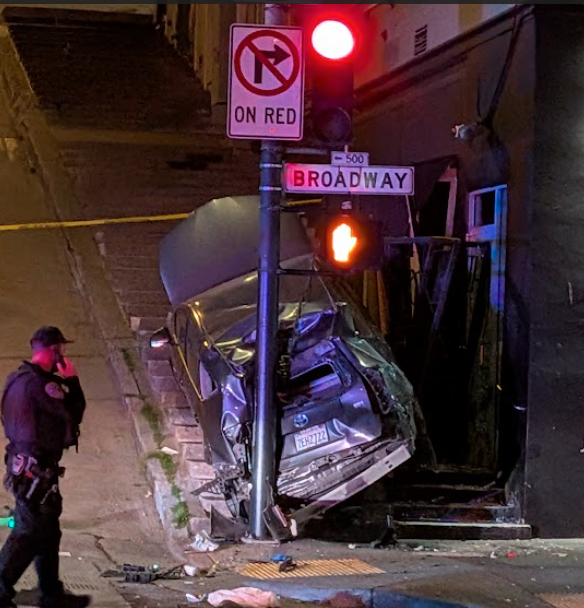
Motorist Careens onto North Beach Sidewalk, Killing Pedestrian
Driver kills pedestrian at another location where a safety project festered
The post Motorist Careens onto North Beach Sidewalk, Killing Pedestrian appeared first on Streetsblog San Francisco.