

Op/Ed
Op-Ed: How Cities Should Regulate Scooters


October 29, 2019

Op-Ed: What Flying Ubers Mean For the Future
Really? Flying taxis? Why don't we just make real transit better?
August 26, 2019

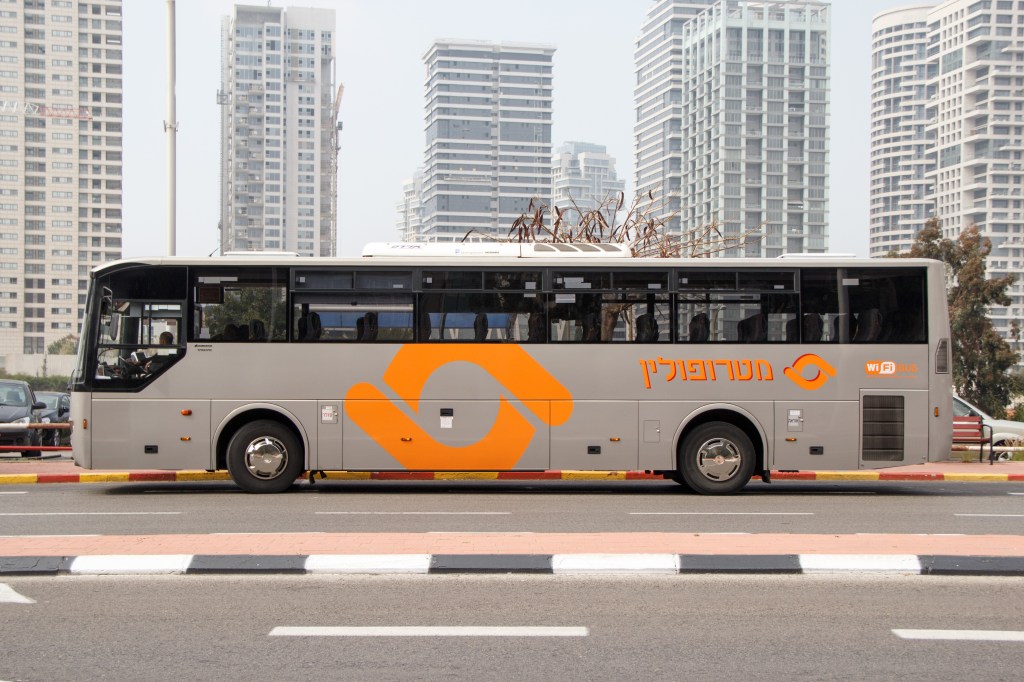
Op-Ed: A Lesson from Israel on How to Double Bus Ridership in U.S. Cities
What can U.S. cities learn from Herzliya’s unexpected success at significantly increasing bus ridership?
April 29, 2019
Auto Worship Still a Sign of the Times
When the Supreme Court held this week that the Environmental Protection Agency does, in fact, possess the latitude to protect the environment, the New York Times called it "a victory for a world whose environment seems increasingly threatened by climate change."
April 4, 2007
Going Nowhere Fast
This weekend's City section of the New York Times featured a
mind-blowing essay by children's-book writer Sarah Shey about her habit
of taking her one-year-old son out for drives in the city -- drives
with no destination or purpose in mind, in which she crossed and
recrossed the Brooklyn Bridge endless times.

March 26, 2007
Parochial Thinking Amid Ominous Signs
The Committee to Keep NYC "Congestion Tax Free." Front row, left to right: John Corlett, Automobile Club of New York; Ray Irrera, Queens Chamber of Commerce;
Council Member David Weprin; Lobbyist
Walter McCaffrey; Joe Conley of Queens Community Board 2.
December 12, 2006
If a 26.2-mile, Half-Day Street Closure Generates $188M…
Why not Close New York City's Streets to Traffic More Often?

November 7, 2006
Urban Density and a Pocketbook Plea for Congestion Pricing
Of the ten largest cities in the United States, New York has far and away the greatest population density: 26,402.9 people per square mile, more than double the second densest big city, Chicago. The chart at right shows how the largest metropolitan areas stack up in terms of core population, overall population and core population density. This fact alone should force New York City authorities to think differently than the rest of the country on all sorts of matters of public policy. New York is a quantitatively different animal than the other big American metropolitan regions in terms of percentage of people that live in the core, density and size of the core and size of the metropolitan area.
September 26, 2006